_edited.jpg)
Fourteen years, one million pounds, and a promise to my brother

I never set out to raise a million pounds. When my brother Gianpiero and I ran the first Mental Health World Cup back in 2012, I just wanted to get Lanfranco's mates together for a kickabout and do something, anything, with the grief that had nowhere else to go. Gianpiero was there from day one, helping me pull the early events together when neither of us had a clue what we were doing.
Fourteen years on, we've raised over £1 million for mental health. I still don't quite know how to hold that number in my head.
Where it started
The first "World Cup" wasn't a World Cup at all. It was Downhills Park, a few borrowed gazebos, and plastic goals from Argos. My mum and dad baked cakes to sell on the day. We didn't have money for proper equipment in the early years, so some seasons the goalposts were literally jumpers thrown down on the grass, like every five-a-side game any of us had ever played as kids. It felt right that way. Lan never got to see a stadium, but he'd have recognised that park in a heartbeat.
We had no idea what we were doing. I wrote to every Premier League club, half the press and a few politicians, and almost nobody replied. Suicide wasn't something people wanted to put their name next to in 2012. But 250 of Lan's friends turned up anyway, because it was four months since we'd lost him and everyone needed somewhere to put that.
For years it stayed close to home: Downhills Park, then Arsenal's community hub, always run on favours and goodwill. Every trophy, every gazebo, every sausage roll came from someone who cared enough to give something up for a Sunday. That's still the spirit of it now, it's just the scale that's changed.
Where we are now
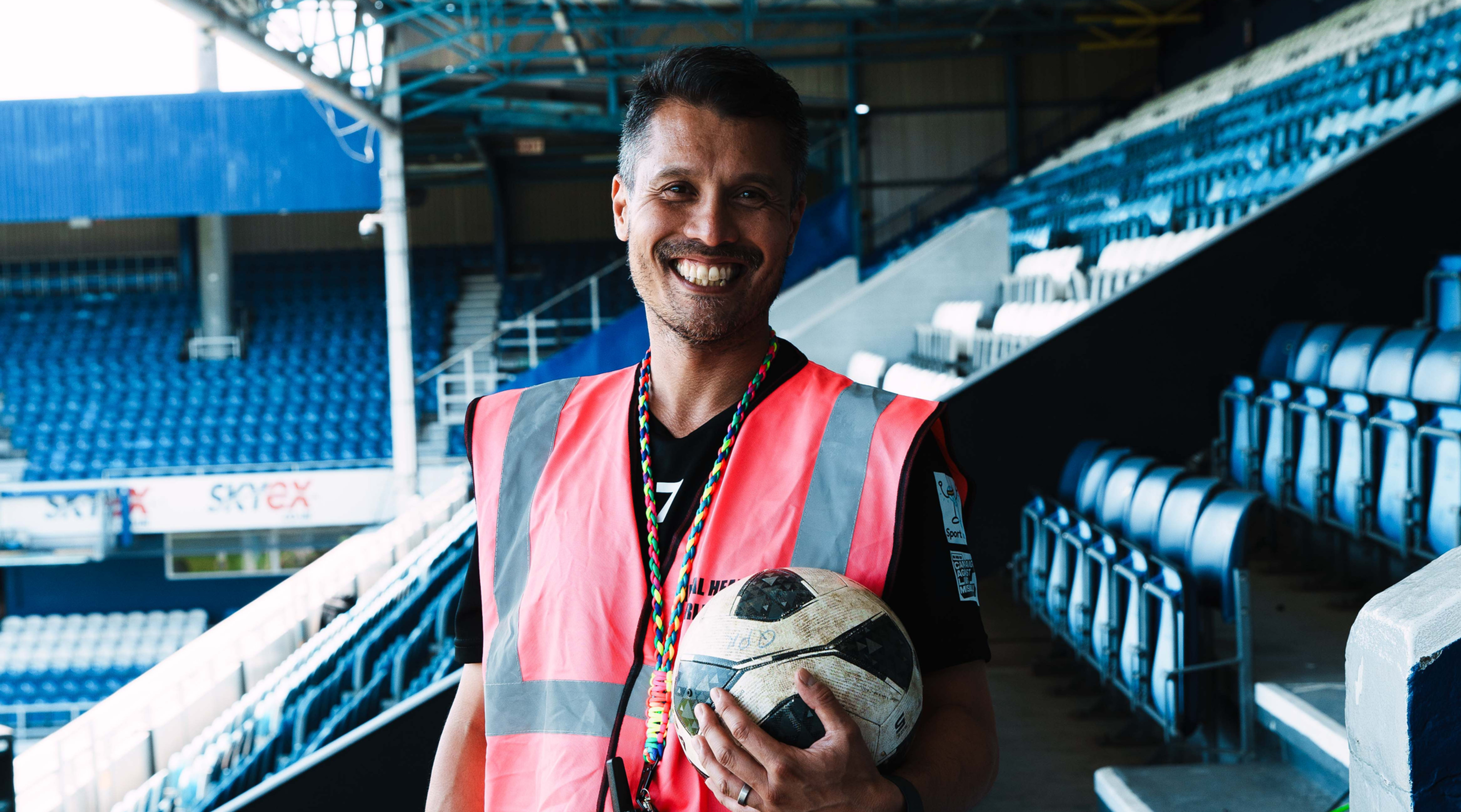
Last year we ran the tournament across four stadiums, Watford, QPR, Everton and Millwall, and raised almost half a million pounds in that single year alone. Half a million, in twelve months, from an idea that started with a papier-mâché trophy and my brother's mates. Every penny of that, like every penny before it, went straight to mental health causes. That's never changed and it never will.
We went from 32 teams in a park to thousands of players across some of the biggest grounds in the country. Companies sponsor teams now. Football clubs come to us. But it's still, underneath all of it, the same idea: get people playing, get them talking, and use football to make it normal to say you're not okay.
Why it still matters
Suicide is still one of the biggest killers of men under 50. The conversation has moved a huge amount since 2012, people are more willing to talk, more willing to listen, but moving the conversation was never the finish line. The next job is making sure people know what to do once someone does open up.
That's what keeps me doing this fourteen years later. Not the number, even though the number still stops me in my tracks. It's watching a stranger cross a pitch mid-match to check on a teammate who's gone quiet. That's Lan's legacy, played out on a football pitch, again and again, one tournament at a time.
Here's to the next fourteen.
Giancarlo


Comments